






































































































































8 Nutrient-Dense Foods That Support a Healthy Immune System
Author: RVLNSV PRASAD
Updated On: September 2026
About Us
Author Bio
Editorial Policy
Contact Us
Quick Answer
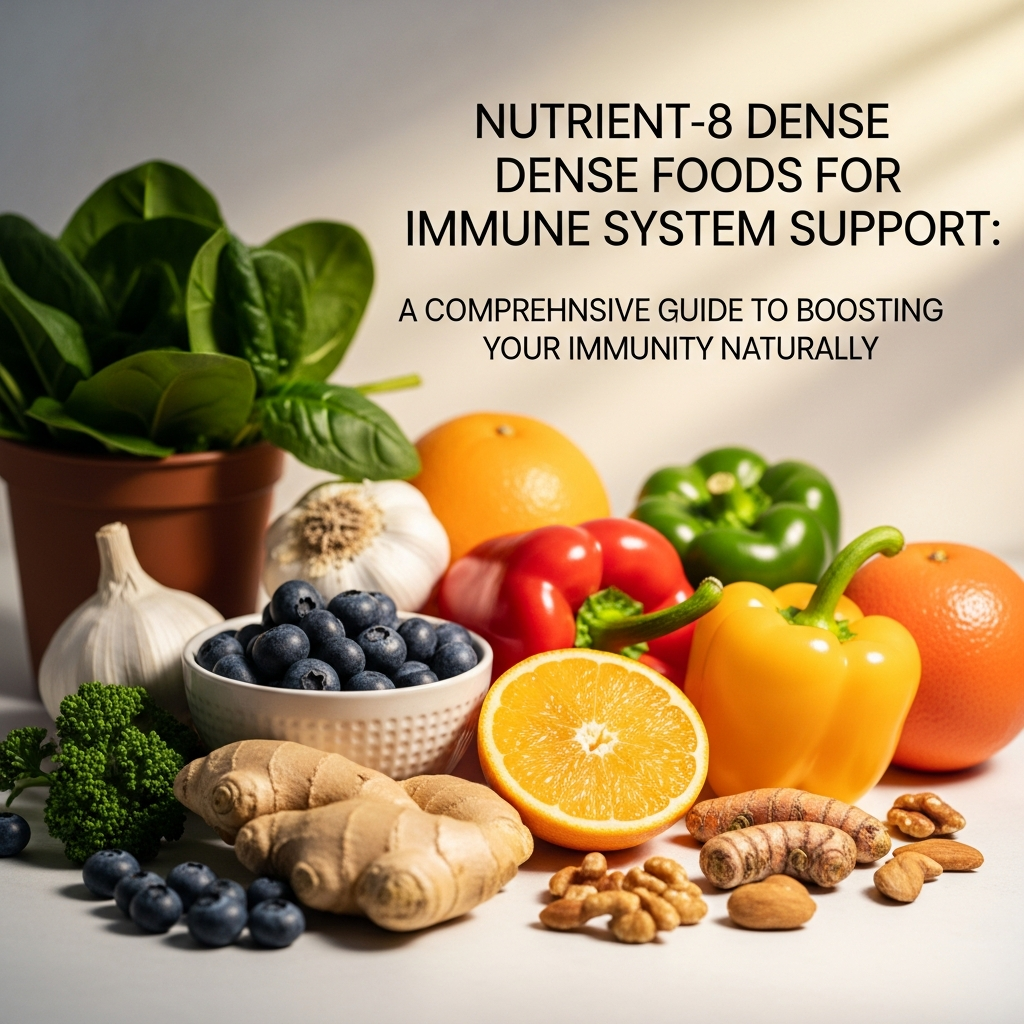
The best nutrient-dense foods for immune health are not necessarily foreign foods or expensive supplements. A varied diet built around fruits, vegetables, pulses, whole grains, nuts, seeds, dairy or suitable alternatives, eggs, fish, and other protein-rich foods can provide many nutrients needed for normal immune function. The World Health Organization’s January 2026 healthy-diet guidance emphasizes adequacy, balance, moderation, and diversity as the foundation of a healthy diet. World Health Organization — Healthy Diet
Important nutrients include vitamins A, B6, B12, C, D, E, and K; folate; iron; selenium; zinc; magnesium; copper; and iodine. Protein also matters because immune cells and other body tissues depend on adequate amino acids. The NIH Office of Dietary Supplements explains that several vitamins and minerals are involved in normal immune function and that nutritional deficiencies can impair immune responses. NIH Office of Dietary Supplements — Immune Function and Infectious Diseases
The important point is that no single food can guarantee protection from infections. Food supports the nutritional foundation on which the immune system works. Harvard T.H. Chan School of Public Health similarly notes that immune function is complex and is influenced by many factors rather than one specific food or nutrient. Harvard T.H. Chan School of Public Health — Nutrition and Immunity
If a person has a nutrient deficiency, correcting that deficiency can be particularly important. Without a deficiency, taking large amounts of supplements does not automatically provide extra protection against infection. NIH explains that adequate nutrition is important for immune function, while routine high-dose supplementation is not a substitute for a healthy diet. NIH ODS — Immune Function: Health Professional Fact Sheet
Introduction
When people search for foods that support the immune system, they often expect a short list of powerful foods that can prevent colds, flu, or other infections.
Real nutrition is more complicated but also more useful.
Your immune system is a complex network involving cells, tissues, organs, physical barriers, antibodies, and signaling molecules. It needs energy and a steady supply of nutrients to function normally. A balanced diet therefore matters more than chasing one supposedly powerful food. Harvard T.H. Chan School of Public Health explains that the immune system depends on many nutrients and lifestyle factors rather than one individual food. Harvard Nutrition Source — Nutrition and Immunity
The World Health Organization’s updated 2026 healthy-diet guidance emphasizes four principles: adequacy, balance, moderation, and diversity. It recommends a wide variety of minimally processed and unprocessed foods, including fruits, vegetables, whole grains, pulses, nuts, seeds, and appropriate protein sources. WHO—Healthy Diet, January 2026
This changed how I think about immune-supporting nutrition.
A few years ago, I used to look for individual foods that might give me a quick health benefit. I gradually found that a more practical approach was to improve the quality of my meals overall. Instead of asking, “Which one food boosts immunity?” I started asking, “Did this meal give me enough protein, vegetables, fruit, fiber, and important micronutrients?”
That question is much easier to use in real life.
This guide explains 8 nutrient-dense foods for immune health, the nutrients they provide, what the evidence actually says, and simple ways to include them in everyday meals.
What Does the Immune System Need From Your Diet?
Your immune system does not run on vitamin C alone.
It depends on a broad range of nutrients. The NIH’s Office of Dietary Supplements identifies vitamins A, B6, B12, C, D, E and K, along with folate, copper, iodine, iron, magnesium, selenium, and zinc, as nutrients involved in maintaining normal immune function. NIH ODS — Immune Function and Infectious Diseases
Protein is also important. Immune cells need amino acids for growth, maintenance, and normal activity. A 2026 review in Seminars in Immunology describes how carbohydrates, fats, and proteins can influence immune-cell metabolism, activation, and function, although these relationships are complex and context-dependent. PubMed — Macronutrient Availability and Immune Cell Responses, 2026
Key nutrients and practical food sources
| Nutrient | Why it matters | Food examples |
|---|---|---|
| Vitamin C | Supports normal immune function and antioxidant defenses | Citrus, guava, kiwi, peppers, broccoli |
| Vitamin A | Supports immune responses and protective barriers | Carrots, leafy greens, eggs, dairy |
| Vitamin D | Important for normal immune function | Fatty fish, fortified foods, egg yolks |
| Vitamin E | Helps protect cells and supports immune function | Almonds, sunflower seeds, nuts |
| Zinc | Involved in innate and adaptive immune function | Beans, nuts, dairy, eggs, seafood |
| Selenium | Supports antioxidant systems and immune function | Eggs, seafood, meat, some nuts |
| Iron | Needed for many biological processes, including immune-cell function | Lentils, beans, meat, leafy vegetables |
| Folate/B vitamins | Support cell production and metabolism. | Legumes, leafy vegetables, eggs, whole grains |
| Protein | Provides amino acids needed for body tissues and immune cells | Eggs, dairy, fish, poultry, legumes, soy |
A varied diet makes it easier to obtain several of these nutrients at the same time. NIH’s professional guidance explains that inadequate intake or deficiency of several micronutrients can adversely affect immune function. NIH ODS — Immune Function: Health Professional Fact Sheet
1. Citrus Fruits and Other Vitamin C-Rich Foods
Oranges, lemons, grapefruit, and other citrus fruits are familiar examples of foods associated with immune health.
The reason is straightforward: citrus fruits provide vitamin C.
Vitamin C is required for normal immune function and also plays important roles in collagen formation, antioxidant protection, and iron absorption. NIH’s vitamin C guidance identifies citrus fruits, peppers, broccoli, strawberries, and tomatoes among useful food sources. NIH Office of Dietary Supplements — Vitamin C Fact Sheet
That last point is worth remembering.
You do not need to drink lemon water every morning to obtain vitamin C.
For example, a whole orange gives you vitamin C together with fiber and other plant compounds. A meal containing lentils and vegetables can also provide vitamin C while helping with iron absorption from plant foods. NIH notes that vitamin C improves the absorption of non-heme iron, particularly from plant foods. NIH ODS — Vitamin C and Health
An easy idea
Try adding one vitamin C-rich food to a meal that contains plant-based iron.
For example:
Dal + spinach + tomato + lemon
Vitamin C can improve absorption of non-heme iron from plant foods. NIH ODS — Vitamin C: Health Professional Fact Sheet
What vitamin C cannot do
Vitamin C is important, but more is not automatically better.
Regular vitamin C intake may modestly reduce cold duration in some circumstances, but it should not be presented as a guaranteed way to prevent or cure infections. NIH explains that the evidence differs between regular use and taking vitamin C after cold symptoms begin. NIH ODS — Vitamin C and Immune Function
So think of citrus as part of a nutritious diet, not as a treatment for infection.
2. Leafy Green Vegetables
Spinach, amaranth, mustard greens, kale, and other leafy vegetables are useful immune-supporting foods because they contribute several nutrients rather than just one.
Depending on the vegetable, they can provide folate, vitamin C, carotenoids, vitamin K, magnesium, and other plant compounds.
WHO recommends a diverse diet containing vegetables, fruits, pulses, whole grains, nuts, and seeds because dietary diversity improves the chance of meeting nutritional requirements. WHO—Healthy Diet, 2026
A practical Indian option
You do not need an expensive salad bowl.
Try:
Palak dal + roti + vegetable salad
or:
Mixed leafy-vegetable sabzi + dal + brown rice
These meals combine plant foods with protein and carbohydrates rather than treating one vegetable as a miracle ingredient.
WHO’s India healthy-diet guidance specifically describes a healthy diet in terms of combinations of cereals or other staples, legumes, vegetables, fruit, and suitable animal-source foods such as eggs, fish, and milk. WHO India—Healthy Diet
One useful cooking point
Some nutrients are affected by cooking, but that does not mean raw vegetables are always better.
Use a mixture of raw and cooked vegetables across the week. This makes healthy eating easier to maintain and gives you greater dietary variety.
3. Yogurt and Other Fermented Foods
Yogurt is interesting because it provides protein and, depending on the product, live microorganisms.
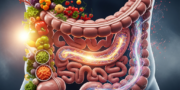
The gut and immune system are closely connected. Harvard’s Nutrition Source explains that the gut is a major site of immune activity and that a fiber-rich, plant-rich diet can support beneficial intestinal microorganisms. Harvard T.H. Chan School of Public Health — Nutrition and Immunity
However, this area needs careful wording.
Eating yogurt does not mean that you have “strengthened your immune system” overnight.
Recent research continues to investigate probiotic yogurt and markers such as short-chain fatty acids, inflammation, and oxidative stress. A 2026 systematic review and meta-analysis included 33 randomized trials and found limited evidence that probiotic yogurt is superior to conventional yogurt across several outcomes; the authors described the certainty of evidence as very low. PubMed — Probiotic Yogurt Systematic Review and Meta-Analysis, 2026
How I would use yogurt
Choose plain or lightly sweetened yogurt and combine it with:
-
Fruit
-
Chia seeds
-
Ground flaxseed
-
Oats
-
Nuts
This creates a more balanced snack than relying on a sweetened flavored yogurt alone.
4. Nuts and Seeds
Almonds, sunflower seeds, pumpkin seeds, walnuts, and other nuts and seeds can make a useful contribution to a nutrient-rich eating pattern.
Almonds are particularly well known for vitamin E. Vitamin E is involved in immune function and helps protect cells from oxidative damage. The NIH includes vitamin E among the nutrients involved in normal immune function. NIH ODS — Immune Function and Infectious Diseases
Seeds can also provide magnesium, zinc, selenium, or other nutrients depending on the type.
The portion matters.
Nuts are nutritious, but they are energy-dense.
A large bowl eaten mindlessly can turn a healthy snack into a very high-calorie one.
A practical approach is to portion a small handful into a container rather than eating directly from a large packet.
Easy combination
Try:
Plain yogurt + fruit + a small portion of almonds or seeds
This gives you protein, fruit, fiber, and healthy fats in one simple snack.
5. Beans, Lentils, and Other Pulses
This is one category I would add to your original article because it is practical, affordable, and especially relevant for Indian readers.
Lentils, chickpeas, kidney beans, black gram, green gram, and other pulses provide protein, fiber, folate, iron, and other nutrients.
WHO specifically recommends pulses such as lentils and beans as part of a healthy diet and identifies them among the main food groups that can contribute to dietary diversity. WHO—Healthy Diet, 2026
They also solve a common problem.
Many people focus on colorful fruits and vegetables when discussing immune health but forget about adequate protein and overall nutritional adequacy.
A bowl of dal is not a “superfood.”
It is something better: an everyday food that can contribute to a balanced meal.
Try this simple formula.
Dal + vegetable + whole grain + vitamin C-rich food
For example:
Dal + spinach + roti + tomato salad
That combination provides protein, fiber, and several micronutrients while keeping the meal familiar and affordable.
6. Eggs and Other Protein-Rich Foods
Eggs provide high-quality protein and several micronutrients, including vitamin B12 and selenium.
Fish, poultry, dairy foods, and soy foods can also contribute protein and different vitamins and minerals.
This is important because immune health is not only about antioxidants.
Your body continually produces and maintains cells and proteins. Adequate nutrition provides the building blocks required for these processes.
Recent research published in 2026 continues to investigate how macronutrient availability affects immune-cell metabolism and function. The review emphasizes that carbohydrates, fats and proteins can influence immune responses through different metabolic pathways. PubMed — Macronutrient Availability and Immune Cell Responses, 2026
A practical meal
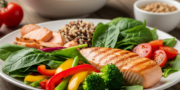
Instead of searching for a special “immune-boosting” recipe, build a balanced plate:
Eggs + vegetables + whole-grain roti + fruit
For vegetarians, tofu, paneer, soy foods, and pulses can be used in appropriate portions.
7. Fatty Fish and Vitamin D-Rich Foods
Salmon, sardines, tuna, and other fatty fish provide protein and vitamin D, although the amount varies by fish.
Vitamin D is one of the nutrients involved in normal immune function. NIH includes vitamin D among the nutrients important to immune health and explains that deficiency can impair normal immune responses. NIH ODS — Immune Function and Infectious Diseases
However, vitamin D status is different from simply eating one vitamin-D-rich food.
The amount obtained from food can be relatively modest, and individual vitamin D status depends on factors such as diet, sun exposure, age, and other characteristics.
A useful approach
If you eat fish, include fatty fish as part of a varied diet.
If you do not eat fish, discuss fortified foods or supplementation with a healthcare professional if there is concern about vitamin D status.
Do not automatically take high-dose vitamin D because you read that it “boosts immunity.”
More is not necessarily better.
8. Garlic, Ginger, and Colorful Plant Foods
Garlic and ginger deserve a place in a practical immune-health diet, but I would describe them differently from your original article.
They are flavorful plant foods containing biologically active compounds.
That makes them useful additions to meals.
It does not mean garlic is a natural antibiotic or that ginger is a medicine for infections.
This distinction is important.
Harvard’s Nutrition Source explains that immune function is supported by a broad range of nutrients and that individual foods are unlikely to provide special protection by themselves. Harvard T.H. Chan School of Public Health — Nutrition and Immunity
A simple kitchen strategy
Add garlic, ginger, turmeric, tomatoes, onions, coriander, and other vegetables to meals when you enjoy them.
The goal is not to create a medicinal drink.
The goal is to make nutritious food flavorful enough that you want to eat it consistently.
The Bigger Picture: Your Diet Matters More Than One Food
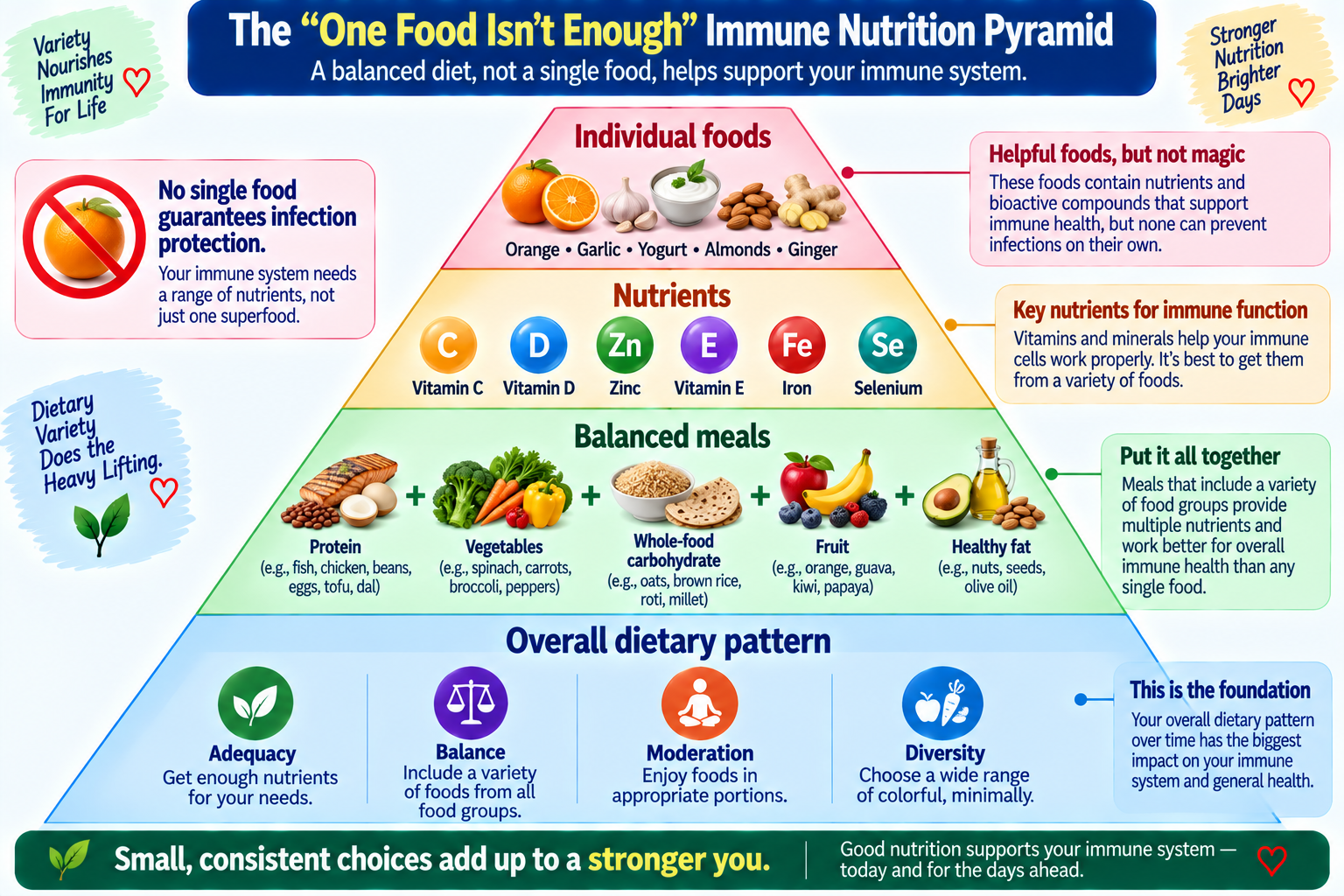
This may be the most important section of the entire article.
A person could eat oranges every day while still having an overall poor diet.
Another person might never eat a “superfood” but regularly consume vegetables, pulses, whole grains, fruit, nuts, seeds, and adequate protein.
The second pattern is closer to what evidence-based nutrition recommends.
WHO’s 2026 healthy-diet guidance emphasizes adequacy, balance, moderation, and diversity rather than dependence on individual foods. It also recommends limiting foods high in free sugars, unhealthy fats, and sodium. WHO—Healthy Diet, January 2026
Harvard’s Nutrition Source similarly explains that immune function is influenced by many factors and that no individual food or nutrient provides special protection on its own. Harvard T.H. Chan School of Public Health — Nutrition and Immunity
A Simple Immune-Supportive Plate
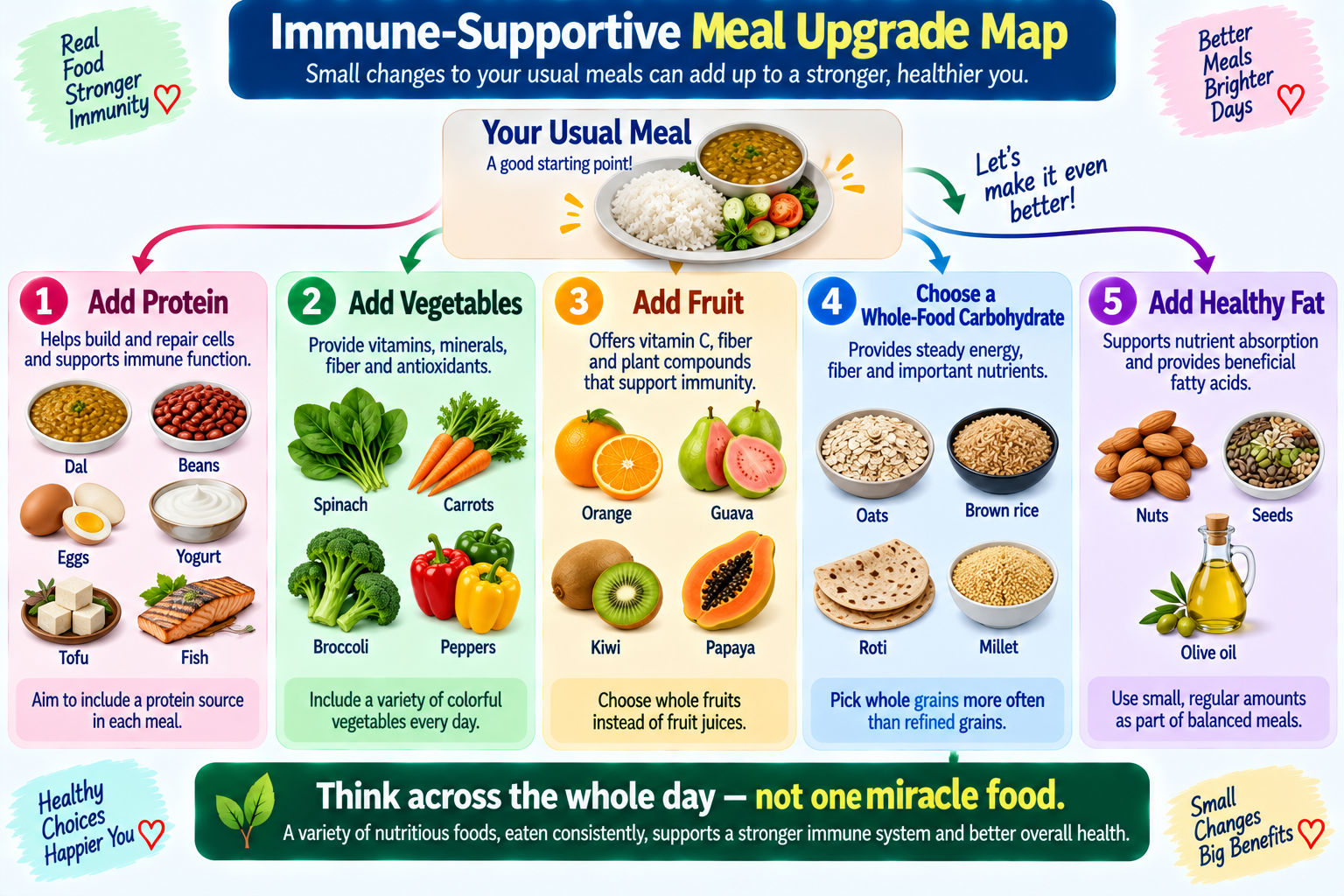
Instead of memorizing a list of eight foods, use this practical plate method.
| Part of the meal | Examples |
|---|---|
| Protein | Dal, beans, eggs, yogurt, paneer, tofu, fish, poultry |
| Vegetables | Spinach, carrots, broccoli, peppers, beans, cauliflower |
| Fruit | Orange, guava, kiwi, berries, papaya, apple |
| Whole-food carbohydrate | Oats, brown rice, whole-wheat roti, millet |
| Healthy fat | Nuts, seeds, olive oil, or other unsaturated-fat sources |
This approach is consistent with WHO’s broader recommendation to eat a diverse diet containing fruits, vegetables, pulses, whole grains, nuts, and appropriate protein sources. WHO—Healthy Diet, 2026
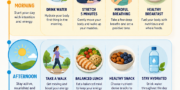
A One-Day Meal Plan for Immune-Supportive Nutrition
You do not need to eat all eight foods every day.
Breakfast
Vegetable omelet or tofu scramble + whole-grain roti + one fruit.
Mid-morning
Plain yogurt with fruit and a small portion of nuts.
Lunch
Dal + mixed vegetables + whole-wheat roti or brown rice + salad.
Evening
Roasted chickpeas or fruit with a small serving of seeds.
Dinner
Fish, eggs, tofu, paneer, or beans + vegetables + whole grain.
Before bed, if genuinely hungry
Plain yogurt or another appropriate protein-rich food.
This is not a medical prescription. Portions should reflect your age, body size, activity level, health conditions, and dietary needs.
Three Easy Habits: Most “Immune Food” Articles Miss
1. Upgrade the meal you already ate.
You do not need to completely redesign your diet.
If you already eat dal and rice, add vegetables and a fruit.
If you eat roti, add a protein-rich side and vegetables.
Small upgrades are often easier to maintain than a dramatic diet overhaul.
2. Build a “nutrient backup” shelf.
Keep a few inexpensive foods available:
-
Lentils
-
Chickpeas
-
Oats
-
Nuts or seeds
-
Frozen vegetables
-
Canned or frozen fish, if appropriate
-
Plain yogurt
-
Seasonal fruit
This reduces the chance that a busy day automatically turns into a highly processed meal.
WHO’s 2026 guidance recognizes that affordability and access influence whether people can consistently follow a healthy diet, making practical, locally available foods especially important. WHO—State of Food Security and Nutrition in the World 2026
3. Combine nutrients instead of chasing one ingredient.
A useful meal does not need to contain every nutrient.
Think across the entire day.
One meal may provide vitamin C-rich fruit. Another may provide protein and zinc. A third may include leafy vegetables and whole grains.
Dietary variety does the heavy lifting.
What Recent Research Is Teaching Us in 2026
Nutrition and immune function remain an active research area.
A 2026 review in Seminars in Immunology examined how carbohydrates, fats, and proteins can influence immune-cell metabolism, activation, and function. The researchers describe complex interactions rather than a simple “good food versus bad food” model. PubMed — Macronutrient Availability and Immune Cell Responses, 2026
Another important area is the gut microbiome. Research continues to examine how dietary patterns, fiber, microbial metabolites, and immune signaling interact. Harvard’s Nutrition Source describes the microbiome as an active area of research and notes the potential role of fiber-rich plant foods in supporting beneficial intestinal microorganisms. Harvard T.H. Chan School of Public Health — Nutrition and Immunity
This is an important lesson for readers.
New laboratory findings do not automatically mean that a particular food or diet has been proven to prevent disease in humans.
Human outcomes matter.
That is why I prefer the phrase “support normal immune function” rather than promising that a food will “supercharge” immunity.
What About the Gut Microbiome?
The gut microbiome is another rapidly developing area of nutrition research.
The intestine contains a large community of microorganisms, and diet can influence the environment in which these microbes live.
Fiber-rich foods such as vegetables, fruits, legumes, and whole grains provide substrates that some beneficial microbes can use. Harvard’s Nutrition Source describes the connection between dietary fiber, gut microbes, and short-chain fatty acids as an important area of immune research. Harvard T.H. Chan School of Public Health — Nutrition and Immunity
However, avoid turning this into another “eat this one food to fix your gut” message.
Your microbiome is influenced by many factors.
A varied plant-rich diet is a more useful long-term strategy than repeatedly buying products marketed as “gut detox” or “immune boosters.”
Recent randomized-trial evidence on probiotic yogurt also remains cautious: a 2026 systematic review found some changes in specific biomarkers but concluded that the evidence was very low certainty and that superiority over conventional yogurt remains uncertain. PubMed — Probiotic Yogurt Systematic Review and Meta-Analysis, 2026
Common Mistakes People Make With Immune-Supporting Foods
Mistake 1: Looking for one miracle food
No orange, garlic clove, or turmeric drink can replace a varied diet. Harvard’s Nutrition Source specifically cautions against expecting special immune protection from an individual food or nutrient. Harvard T.H. Chan School of Public Health — Nutrition and Immunity
Mistake 2: Assuming “natural” means medically effective
Natural foods can be nutritious without being treatments for infections.
Mistake 3: Replacing meals with juices
Juices can provide some nutrients, but whole fruit generally provides more fiber. WHO recommends emphasizing whole fruits and vegetables and notes that fruit juice can contain substantial amounts of free sugars even when no additional sugar is added. WHO—Healthy Diet, 2026
Mistake 4: Taking large doses of supplements
If you are not deficient, more vitamins and minerals do not automatically mean better immune protection. NIH explains that nutrient supplementation is most relevant when nutritional needs are not being met, while excessive intake of some nutrients can cause harm. NIH ODS — Immune Function and Infectious Diseases
Mistake 5: Ignoring protein
A diet built almost entirely around fruit and vegetables can still be nutritionally incomplete.
Include suitable protein sources throughout the day. WHO’s healthy-diet guidance emphasizes adequate balance among protein, fats, and carbohydrates. WHO—Healthy Diet, 2026
Mistake 6: Forgetting food safety
A healthy diet must also be safe.
WHO specifically states that a healthy diet should be safe and free from microbial and chemical contaminants. WHO—Healthy Diet, 2026
Wash produce appropriately, store foods safely and avoid consuming spoiled or contaminated food.
What Should You Eat When You Feel Sick?
Food does not cure an infection.
When you are sick, however, maintaining hydration and adequate nutrition can be useful, depending on the illness and your ability to eat.
Choose foods that are easy for you to tolerate.
Examples may include:
-
Soups
-
Dal
-
Khichdi
-
Yogurt, if tolerated
-
Soft-cooked vegetables
-
Fruit
-
Eggs
-
Oatmeal
-
Rice with a suitable protein source
If you have persistent vomiting, severe dehydration, difficulty breathing, confusion, severe weakness, or other concerning symptoms, seek medical care rather than relying on foods or home remedies.
WHO has also emphasized that healthy eating and supplements should not be presented as substitutes for appropriate medical measures against infectious diseases. WHO—Healthy Diet and COVID-19 Guidance
Do Supplements Work Better Than Food?
Not automatically.
Food provides combinations of nutrients, fiber, and other compounds in a whole dietary pattern.
Supplements can be useful when a deficiency exists or when a healthcare professional identifies a specific nutritional need.
NIH explains that people who do not obtain enough of a particular nutrient may benefit from supplementation to reach recommended levels. But in people without deficiencies, taking extra vitamins and minerals does not generally provide a reliable shortcut to better immune protection. NIH ODS — Immune Function and Infectious Diseases
This is why I would not build an immune-health strategy around a cabinet full of supplements.
Start with food.
Investigate deficiencies when there is a reason.
Use supplements strategically when appropriate.
My Personal Experience With the “Immune-Boosting Food” Mindset
I used to think that improving health meant finding the right individual food.
I gradually found that approach difficult to maintain.
Instead, I started paying more attention to the structure of my meals. I tried to include vegetables or fruit, a protein source, and a minimally processed carbohydrate more consistently. I also became less dependent on highly processed snacks.
That approach felt much more realistic.
I would not describe my experience as proof that a particular food prevented illness. It is simply what made healthy eating easier for me.
That distinction matters.
A personal experience can explain why a habit was useful, but it cannot replace controlled research.
A Practical 7-Day Challenge
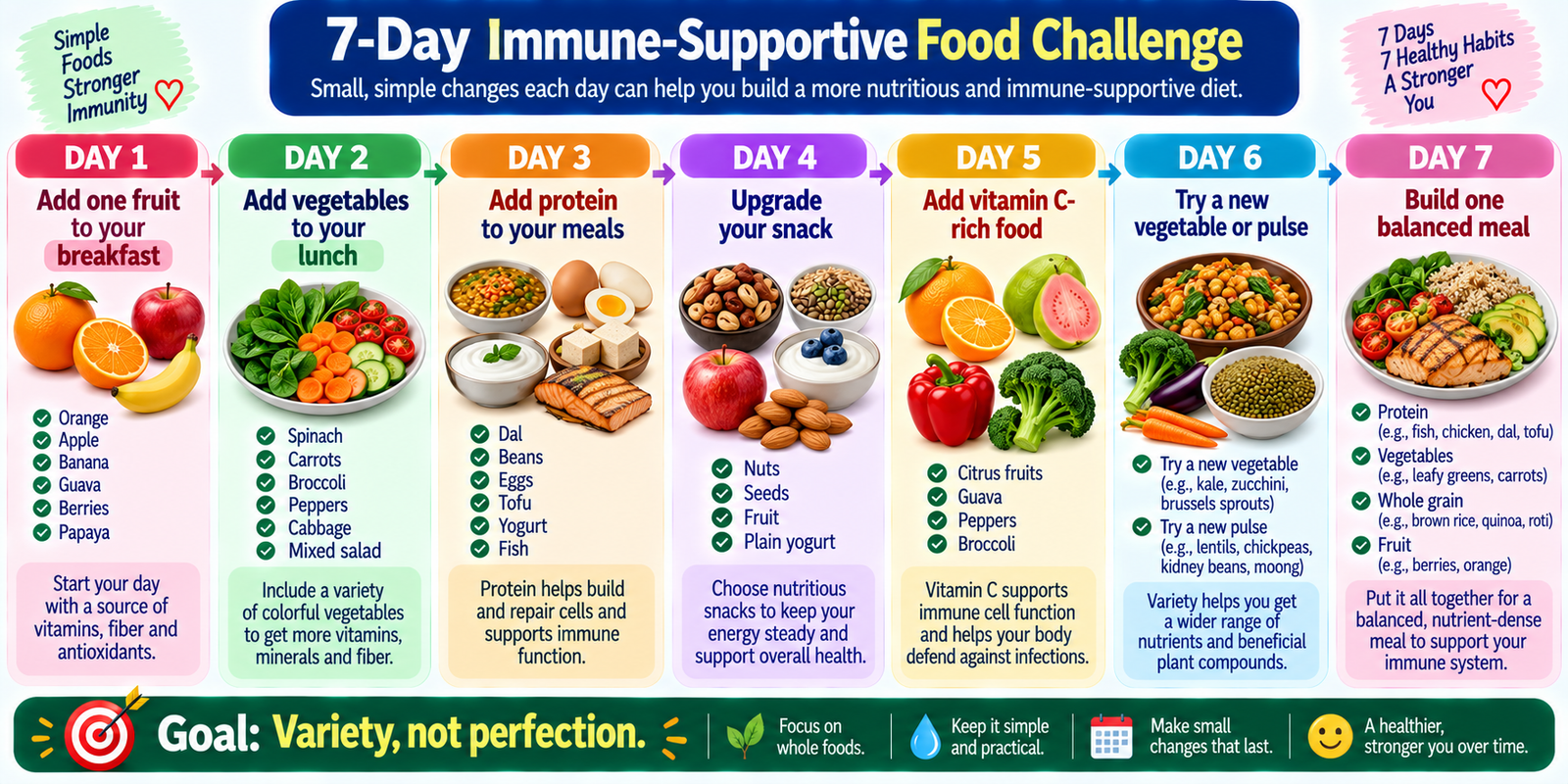
Instead of buying an “immune booster,” try this.
Day 1
Add one fruit to your breakfast.
Day 2
Add a serving of vegetables to lunch.
Day 3
Include dal, beans, eggs, tofu, yogurt, fish, or another suitable protein source.
Day 4
Replace one highly processed snack with nuts, seeds, fruit, or plain yogurt.
Day 5
Add a vitamin C-rich food to a meal.
Day 6
Try a different vegetable or pulse you do not normally eat.
Day 7
Prepare one balanced meal containing protein, vegetables, whole grains or another minimally processed carbohydrate, and fruit.
The objective is not perfection.
It is variety.
Foods to Limit When Building a Healthier Diet
There is no single list of foods that must be completely forbidden.
However, diets high in free sugars, excess sodium, and unhealthy fats can make it harder to maintain overall dietary quality.
WHO’s 2026 guidance recommends emphasizing minimally processed and unprocessed foods while limiting foods high in unhealthy fats, free sugars, and sodium. WHO—Healthy Diet, January 2026
Try to reduce your dependence on:
-
Sugary drinks
-
Highly sweetened snacks
-
Frequent deep-fried foods
-
Highly processed meats
-
Foods very high in sodium
-
Excessive alcohol
-
Large amounts of highly processed convenience foods
The goal is not fear.
It is a replacement.
Instead of asking, “What can I never eat again?” ask, “What healthier food can I add more often?”
When Should You Talk With a Healthcare Professional?
Food advice is not enough for everyone.
Talk with a healthcare professional if you:
-
Have repeated or unusually severe infections
-
Have unexplained weight loss
-
Have persistent fatigue
-
Have symptoms suggesting anemia or nutritional deficiency
-
Follow a highly restrictive diet
-
Have an intestinal condition affecting nutrient absorption
-
Are pregnant or breastfeeding and have questions about supplements
-
Take medicines that may interact with supplements
-
Are considering high-dose vitamins or minerals
A healthcare professional can determine whether testing or targeted nutritional support is appropriate.
Key Takeaways
-
Nutrient-dense foods for immune health are best viewed as part of an overall healthy eating pattern.
-
No individual food can guarantee protection from infection.
-
Vitamins A, B6, B12, C, D, E, and K, folate, iron, selenium, zinc, and other nutrients contribute to normal body and immune function. NIH ODS — Immune Function and Infectious Diseases
-
Fruits and vegetables provide important vitamins, minerals, fiber, and plant compounds.
-
Pulses are valuable sources of protein, fiber, and several micronutrients.
-
Nuts and seeds can contribute vitamin E, magnesium, zinc, and other nutrients.
-
Yogurt can provide protein and, when it contains live cultures, beneficial microorganisms, although evidence about specific immune benefits remains an active research area. PubMed — Probiotic Yogurt Systematic Review and Meta-Analysis, 2026
-
A varied diet is more important than chasing individual “superfoods.”
-
Supplements are most useful when there is a specific nutritional need or deficiency. NIH ODS — Immune Function and Infectious Diseases
-
Good nutrition works alongside sleep, physical activity, stress management, food safety, and appropriate medical care. Harvard T.H. Chan School of Public Health — Nutrition and Immunity
Frequently Asked Questions
What are the best foods for immune health?
There is no single best food. Useful choices include fruits, vegetables, pulses, whole grains, nuts, seeds, yogurt, eggs, fish, and other suitable protein-rich foods because they provide a range of nutrients needed for normal health and immune function. WHO recommends dietary diversity rather than dependence on a single food. WHO—Healthy Diet, 2026
What is the best food to boost the immune system quickly?
There is no food proven to provide an instant immune boost. A varied diet that consistently provides adequate calories, protein, vitamins, minerals, and other nutrients is a more evidence-based approach. Harvard T.H. Chan School of Public Health — Nutrition and Immunity
Do oranges boost immunity?
Oranges are an excellent source of vitamin C, which is important for normal immune function. However, eating an orange does not guarantee protection from infection. NIH Office of Dietary Supplements — Vitamin C
Is yogurt good for immune health?
Yogurt can contribute protein and, when it contains live cultures, probiotics. Research into probiotic foods and immune-related outcomes is ongoing, and a 2026 systematic review found that evidence for probiotic yogurt’s superiority over conventional yogurt remains uncertain. PubMed — Probiotic Yogurt Systematic Review and Meta-Analysis, 2026
Are almonds good for the immune system?
Almonds provide vitamin E, healthy fats, and other nutrients. Vitamin E plays an important role in normal immune function, making nuts a useful part of a varied diet. NIH ODS — Immune Function and Infectious Diseases
Can garlic prevent infections?
Garlic is a nutritious food containing bioactive compounds, but eating garlic should not be considered a proven method of preventing or treating infections. Harvard’s nutrition guidance emphasizes that no individual food provides special immune protection on its own. Harvard T.H. Chan School of Public Health — Nutrition and Immunity
Are supplements better than immune-supporting foods?
Not necessarily. Supplements can be useful when someone has a deficiency or specific nutritional requirement, but routine high-dose supplementation does not automatically improve infection protection in people who are already adequately nourished. NIH ODS — Immune Function and Infectious Diseases
How can I support my immune system naturally?
Focus on dietary variety, adequate protein, fruits and vegetables, whole grains, pulses, nuts, and seeds. Also prioritize sleep, regular physical activity, avoiding tobacco, and appropriate medical care. Harvard’s Nutrition Source describes immune health as the result of multiple interacting factors rather than one food. Harvard T.H. Chan School of Public Health — Nutrition and Immunity
Author Note
This article was written to provide practical, evidence-based nutrition information in simple language. The purpose is not to promote a particular “immune-boosting” food or supplement.
Nutrition research is continually developing. Where evidence is uncertain or still emerging, this article avoids presenting early findings as established medical facts.
Medical Disclaimer
This article is for general educational purposes and does not diagnose, treat, or prevent any disease or infection. Nutritional needs vary according to age, health status, medications, pregnancy, dietary pattern, and other individual factors.
If you have persistent symptoms, recurrent infections, suspected nutrient deficiencies, or a medical condition, consult a qualified healthcare professional.
Fitness Disclaimer
Regular physical activity can be part of a healthy lifestyle, but exercise should be adjusted according to your health, fitness level, and medical conditions. Do not use exercise, diet, or supplements as a substitute for medical treatment.
Research Methodology
This article was developed using current guidance and evidence from authoritative health organizations and peer-reviewed medical literature. Priority was given to the NIH Office of Dietary Supplements, the World Health Organization, the Harvard T.H. Chan School of Public Health, and recent PubMed-indexed research.
The article distinguishes established nutritional roles from emerging research and avoids treating individual foods as cures or guaranteed infection-prevention strategies.
Conclusion
The most useful approach to immune health is not finding one magical food.
It is building a diet that regularly supplies the nutrients your body needs.
That means eating a variety of vegetables and fruits, pulses, whole grains, nuts, seeds, and appropriate protein sources. Yogurt, eggs, fish, citrus fruits, leafy greens, and other nutrient-rich foods can all have a place.
The latest research continues to show that nutrition and immune function are deeply connected, but the relationship is complex. A 2026 review of macronutrient availability and immune-cell responses illustrates why immune health cannot be reduced to one vitamin or one “superfood.” PubMed — Macronutrient Availability and Immune Cell Responses, 2026
So rather than asking which food will “boost” your immunity overnight, ask a more useful question:
Does my overall diet give my body enough variety, protein, vitamins, minerals, fiber, and other nutrients to support normal health?
That is a much more sustainable place to start.
And for most people, improving the meal already on the plate is easier than searching for the next miracle food.
Sources
- NIH Office of Dietary Supplements — Immune Function and Infectious Diseases
- NIH ODS — Immune Function: Health Professional Fact Sheet
- NIH ODS — Vitamin C Fact Sheet
- NIH ODS — Vitamin C: Health Professional Fact Sheet
- World Health Organization — Healthy Diet, January 2026
- WHO India — Healthy Diet
- Harvard T.H. Chan School of Public Health — Nutrition and Immunity
- PubMed — Macronutrient Availability and Immune Cell Responses, 2026
- PubMed — Probiotic Yogurt Systematic Review and Meta-Analysis, 2026
- WHO — State of Food Security and Nutrition in the World 2026
- 12 Best Supplements for Skin Health
- 10 Proven Ways to Boost Your Immune System Naturally
- 10 Best Vitamins for Women After 50 to Boost Energy and Health
- 9 Benefits Of Regular Exercise And Fitness
- Natural Remedies for Boosting Immunity with Plants: A Comprehensive Guide
- Category Wholesome Nutrition
- Home








[…] Nutrient-8 Dense Foods for Immune System Support: A Comprehensive Guide to Boosting Your Immunity Na… […]